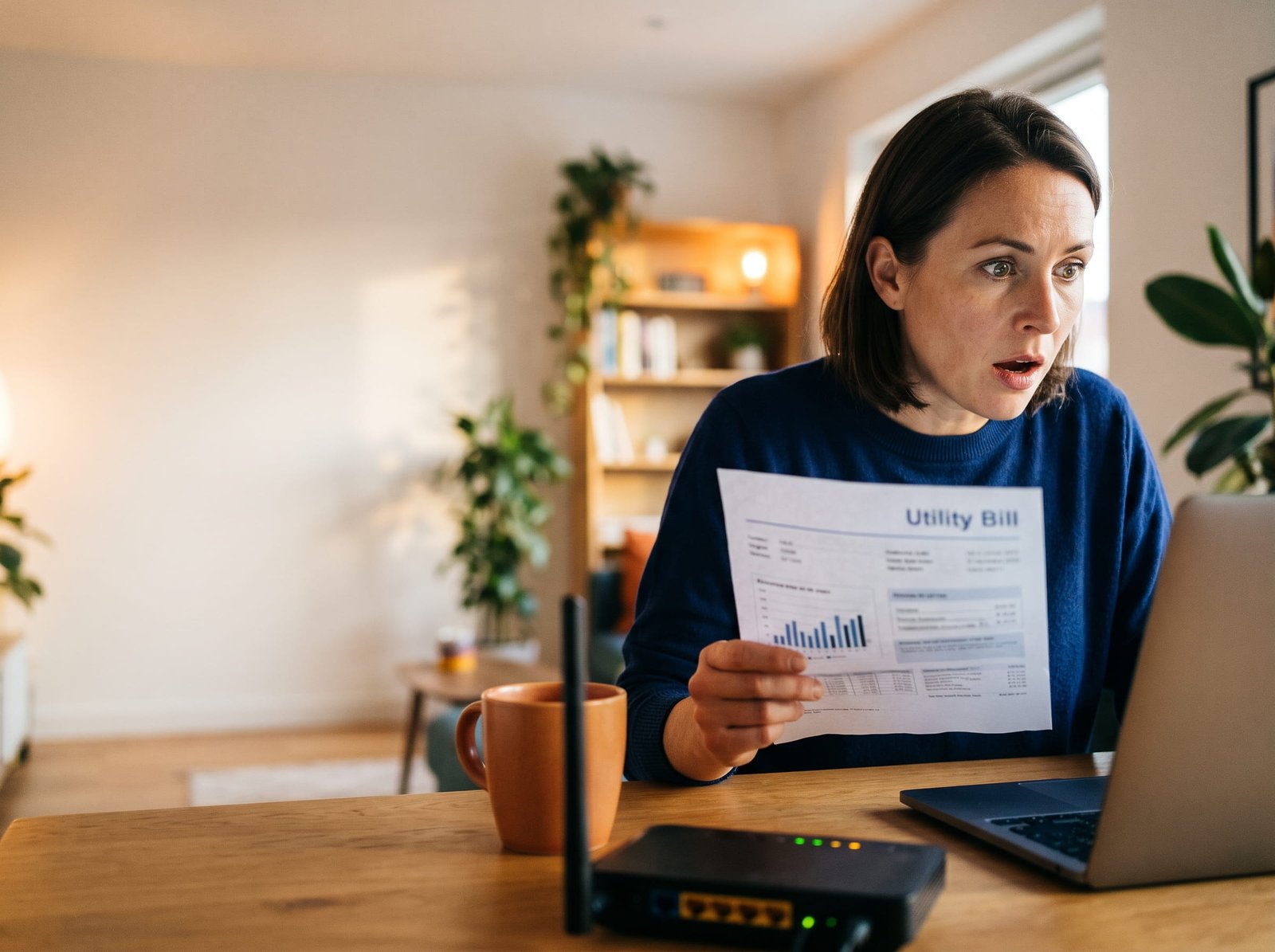
You signed up for a plan advertised at $49.99 a month. Then the first bill arrives, and it says $78. Sound familiar?
You are not imagining it. Internet and TV providers are famous for low headline prices that grow once taxes, equipment charges and expired promotions pile on top. The good news: most of these charges are avoidable, and a 15-minute phone call or a smart switch can often bring your bill back down.
Here are the nine most common reasons your internet bill is higher than you expected, and exactly what to do about each one.
1. Your Promotional Price Expired
This is the number one culprit. Many plans advertise a low price for the first 12 or 24 months, then jump to a much higher “regular” rate without any warning.
How to fix it: Check your sign-up date. If your promo has ended, call and ask for a loyalty or retention offer. Providers often have discounts they do not advertise, especially if you mention you are comparing other options in your area.
2. Equipment Rental Fees
A modem and router rental can add a monthly charge that quietly runs for years. Over time, you can pay far more than the device is worth.
How to fix it: Buy your own compatible modem and router, then return the rented equipment. Check your provider’s list of approved devices before you buy, and keep the return receipt.
3. Broadcast TV and Regional Sports Fees
If you bundle TV, look closely at your bill. These fees are often listed separately from the package price, so the number you were quoted is not the number you pay.
How to fix it: Ask which fees are included in your quoted price. If you rarely watch live TV, compare a streaming-only setup against your current bundle.
4. Data Overage Charges
Some plans have monthly data caps, and going over can mean extra charges or a forced upgrade. Streaming in 4K, cloud backups and smart home cameras use more data than most people expect.
How to fix it: Look at your usage in your provider’s app. If you keep hitting the cap, an unlimited plan may cost less than repeated overages.
5. You Are Paying for Speed You Do Not Need
More speed does not always mean a better experience. A single person streaming video and browsing needs far less than a household of six gaming and working from home at once.
How to fix it: Match your plan to your actual use. As a rough guide, light use suits a lower-speed tier, a few streaming devices need a mid-tier plan, and heavy multi-user homes benefit from fast fiber or high-speed cable. Try our Internet Speed Quiz to find your range.
6. Autopay and Paperless Discounts Fell Off
Some advertised prices depend on autopay or paperless billing. If your card expired or you switched payment methods, the discount may have silently disappeared.
How to fix it: Log in and confirm autopay and paperless billing are active.
7. Bundle Discounts That Are Not Really Discounts
Bundling internet, TV and phone can save money, but only if each part is something you actually use. A cheap bundle with a TV package you never watch costs more than a standalone internet plan.
How to fix it: Price your services separately and compare the total against the bundle, including all fees and the price after the promotion ends.
8. Early Termination and Contract Traps
Some providers lock you into one or two years. Leaving early can trigger a termination fee, which makes it feel impossible to switch even when a better deal exists.
How to fix it: Check your contract end date before you shop. Many people time their switch for the month the contract ends. Also ask whether a new provider will cover your exit fee, since some offer to.
9. You Have Not Compared Providers in Years
New fiber lines, new competitors and new promotions arrive all the time. The provider you chose three years ago may no longer be your best option, and you may now have choices you did not have before.
How to fix it: Enter your ZIP code and see which providers serve your address today. Compare internet providers by ZIP code in under a minute.
Your 15-Minute Bill-Cutting Checklist
- Pull up your latest bill and circle every line that is not the base plan price.
- Check whether your promotion has ended.
- Look up your real monthly data usage.
- Price a self-owned modem and router against your rental fee.
- Compare plans from other providers at your address.
- Call your provider and ask for their best retention offer.
- If they will not budge, switch. Just confirm the price after the promo and any contract terms first.
Frequently Asked Questions
Why did my internet bill go up without warning?
The most common reasons are an expired promotion, a new equipment or regional fee, or a loss of autopay and paperless discounts.
Can I negotiate my internet bill?
Often, yes. Call your provider and ask for the retention department. Mentioning competing offers in your area can help.
Is it cheaper to buy my own modem?
In most cases it is. Rental fees add up month after month, while a compatible modem is a one-time purchase.
How do I find out what providers are available at my address?
Enter your ZIP code on Top Providers to see the providers, speeds, prices and contract terms available where you live.
The Bottom Line
Your internet bill is not a fixed cost. It is a negotiable one. A few minutes of checking your fees, trimming what you do not use and comparing local options can make a real difference over a year.
Ready to see what you could save? Enter your ZIP code and compare the providers available at your address.